Global Watchdog
Media And Commentary


Nine cards, one question: which one belongs in your wallet next to Rakuten? I compared the Amex, Chase, and Bilt cards I can actually refer, with current October 2026 fees and earning rates, and picked the one most people should get first.
 Global Watchdog is reader-supported, with no advertisers and no government entity to answer to. If you enjoyed this article, you can help keep it coming with a one-time donation or monthly support: Support on PatreonDonate on Ko-fi
19 min read
Last updated
Most people think a $1,000 purchase earns one reward: whatever their credit card hands them. That is leaving money on the table, and around here we do not leave money on tables. Start that same purchase through Rakuten and you can potentially earn Rakuten rewards on the transaction while still earning the full rewards from the card you pay with. Then Rakuten lets you take your payout as Amex Membership Rewards points or Bilt Points instead of pennies. The best credit cards to pair with Rakuten make both halves of that stack bigger.
The catch is knowing which card should be doing what. You do not need nine cards. Most folks need one good card, maybe two. This guide walks through the best credit cards to pair with Rakuten, what each one costs, what it earns, and who should skip it entirely. Full removal notice, since I used to preach otherwise: the personal Amex Gold card that anchored the old version of this article is gone from my wallet and gone from this guide. I cannot refer it, I no longer carry it, and I am not going to sell you something I would not use myself.
Disclosure: This article contains referral links. I may receive points, cash, or other rewards if you apply or sign up through certain links. Offers and card terms can change, so always verify the current offer before applying. Using a link here costs you nothing extra.
Last updated October 5, 2026: fully rebuilt. The personal Amex Gold and generic personal Platinum sections are out, current October 2026 fees and earning rates are in, and every card covered is one I can actually refer.

Professor Winston Wants to Know
Our resident watchdog is taking the temperature of the room.
What reward do you value most from everyday spending?
One tap, no account or email needed. Results are shown after you vote.
Want to say more? The comments below are open.
What is covered here:
Table of Contents
The concept the old guide never explained clearly, so let me fix that: the card you pay with and the way Rakuten pays you are two different things. A Rakuten shopping trip has three layers, and you can collect on every one of them.
Rakuten itself says its rewards can stack with credit card rewards, and in practice that is exactly how it works. You could start a purchase at Rakuten, pay with a Chase card, earn Chase rewards on the charge, and still have your Rakuten payout land as Amex points or Bilt Points. The ecosystems do not have to match. That one idea is worth more than any single card in this guide.
Quick version, because the full tutorial lives in the companion piece. Rakuten pays cash by check or PayPal, or you can take your earnings as Amex Membership Rewards points at 100 points for every $1 of cash back, or as Bilt Points. The points options are where the travel value hides. For the step by step setup, read How to Turn Rakuten Cash Back Into Amex Membership Rewards and Free Travel.
New to Rakuten? Check my Rakuten referral link for the current new member offer. Rakuten changes its referral promotions periodically, so I do not print a dollar amount here that will be wrong by next quarter.

| Card | Best for | Annual fee* | Rewards ecosystem | My role for it |
|---|---|---|---|---|
| Blue Business Plus | Simple business spending | $0 | Amex Membership Rewards | Best low cost Amex entry |
| Amex Business Gold | High bonus category business spend | $375 | Amex Membership Rewards | Business category maximizer |
| Amex Business Platinum | Premium business travel | $895 | Amex Membership Rewards | Premium high spend option |
| Schwab Platinum | Premium personal travel, Schwab users | $895 | Amex Membership Rewards | Premium personal option |
| Freedom Unlimited | Simple personal spending | $0 | Chase Ultimate Rewards | Easy Chase stack |
| Ink Business Cash | Internet, phone, and office spend | $0 | Chase Ultimate Rewards | Category business card |
| Ink Business Unlimited | General business spend | $0 | Chase Ultimate Rewards | Simple catch all |
| Ink Business Preferred | Business plus travel rewards | $95 | Chase Ultimate Rewards | Transferable Chase points |
| Bilt Palladium | Housing plus premium Bilt strategy | $495 | Bilt Points | Alternative ecosystem |
*Annual fees and benefits shown as of October 2026. Terms can change; verify current terms before applying. Some links in the card sections below are referral links.
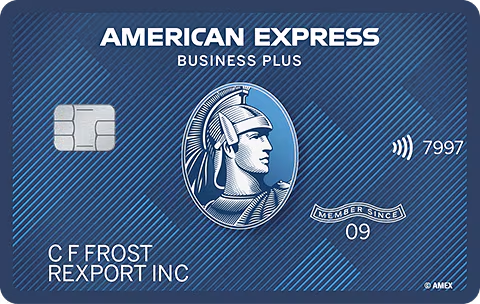
If this whole guide collapsed into one recommendation, it would be this card. The Blue Business Plus has a $0 annual fee and earns 2X Membership Rewards points on the first $50,000 in eligible purchases each calendar year, then 1X after that. No categories to babysit. No rotating anything. You swipe, you earn 2 points per dollar, and those points pool with every other Membership Rewards card you hold.
It also quietly does the most important job in this entire strategy: holding it makes you eligible to take your Rakuten payouts as Amex points. A free card that turns your shopping rebates into airline transferable points is a good deal by any measure.
Who it fits: anybody with legitimate business activity, freelancing, a side business, a blog, a shop, rental property, who wants Membership Rewards without another annual fee. Who should skip it: folks who want lounge access and luxury travel perks, because this card has none, and pure cash back people who will never transfer a point to an airline.
Check the Blue Business Plus and the current welcome offer. Welcome offers and APRs change, so I will not print numbers here that go stale. American Express may also show different offers to different applicants.
Yes, there is still a Gold card in this guide. Just not the personal one I used to push. The Business Gold is the category earner of the family: 4X Membership Rewards points in your top two eligible spending categories each billing cycle, on up to $150,000 in combined purchases per calendar year, plus 3X points on flights booked directly with airlines and on prepaid hotels booked through Amex Travel. The annual fee is $375.
The categories cover the kind of spending real businesses actually have: advertising, computer and software purchases, gas, dining, transit, and shipping, among others. Run a website, buy ads, pay for software subscriptions, feed a work crew, and this card starts paying for itself. Business Gold also includes various statement credit benefits, but those offers change, so check the current terms before assigning them any value in your math.
Who it fits: business owners whose spending naturally lands in two fat categories. Who should skip it: anybody whose spending is spread thin and flat, because you would be paying $375 a year for 1X points on most of it. The Blue Business Plus beats it for that wallet.
Check the Amex Business Gold and the current welcome offer.
Let me tell you about this card the way I wish somebody had told me. The Business Platinum costs $895 a year. It earns 5X points on flights and prepaid hotels booked through Amex Travel, 2X points on eligible purchases of $5,000 or more and in select business categories up to $2 million per calendar year, and 1X on everything else. It comes with access to more than 1,550 airport lounges, a stack of credits for hotels, airline fees, CLEAR+, and Hilton, and elite status with a couple of hotel programs.
Notice what I did not do: list all twenty something credits like a salesman trying to convince you the card pays for itself. Credits you would not naturally use are worth exactly zero dollars, no matter what the brochure claims the total adds up to. If you travel for business constantly and will use the lounges and credits on expenses you already have, the math can work. If you are buying it for the metal card and the vibes, keep your $895.
A story, since I actually did this: when I picked up the Business Platinum, I timed it around buying my 2025 Black Edition Honda Ridgeline. I put the entire truck purchase on the card, met the welcome offer spending requirement in one swing, and earned an additional 71,000 points because a single purchase that big qualified for the card’s 1.5X large purchase rate. That transaction took place under the Business Platinum earning structure in effect at the time; American Express has since changed the card’s earning rules. Under the current rules, a purchase like that earns 2X up to the annual cap. Do not go buy a truck for points, please, but if a large business purchase is already in your future, timing it with a premium card is not stupid.
Who it fits: heavy business travelers and high spenders who will use lounges and credits. Who should skip it: everybody else, and I mean that kindly.
Check the Business Platinum and the current welcome offer.
The old guide pushed the generic personal Platinum. I do not have a referral for that card, so out it goes. What I can refer is its close cousin, the Platinum Card for Schwab, and for the right reader it is genuinely more interesting.
Same premium skeleton: $895 annual fee, 5X points on qualifying airfare and prepaid hotel spending, the Global Lounge Collection, a $600 hotel credit, and the usual drawer full of travel and lifestyle credits. The Schwab twist is the extras on top: an annual Schwab Appreciation Bonus based on your qualifying Schwab holdings, and the ability to turn Membership Rewards into cash in your Schwab account through Invest with Rewards. You need an eligible Schwab brokerage account, which makes this a card for people already in that ecosystem.
Who it fits: Schwab customers who travel enough to use premium perks and like the idea of points that can slide into investments. Who should skip it: anybody without Schwab money, and anybody who would not use the lounges. An $895 fee to impress the checkout clerk is a bad trade.
Check the Platinum Card for Schwab and the current offer. Note that my link may show you other Amex cards as well; make sure you are looking at the Schwab version before you apply.
The biggest change in this whole space since the old guide: Rakuten now pays out in Bilt Points. Link a free Bilt Rewards account to Rakuten, keep the email addresses matching on both accounts, choose Bilt Points as your payout method, and your shopping cash back lands as Bilt Points instead. Those points transfer to airlines and to World of Hyatt, and Hyatt is where they can be worth well more than a penny apiece. You do not need a Bilt credit card for any of this. I explain the setup in detail in the Rakuten tutorial linked up top.
If you decide the Bilt ecosystem deserves a bigger role in your life, the Bilt Palladium is the premium card in the lineup. As of October 2026 it carries a $495 annual fee, earns 2X points on everyday purchases and up to 1.25X points on rent and mortgage payments under Bilt’s housing rewards structure, and includes a $400 annual Bilt Travel hotel credit (handed out as $200 twice a year), $200 a year in Bilt Cash, and Priority Pass lounge access. The housing piece is the real draw: earning points on rent or a mortgage payment, with no transaction fee, is something almost nobody else offers.
Who it fits: renters and mortgage holders with big housing payments who will actually play the Bilt game. Who should skip it: anyone who just wants Rakuten points, because the free Bilt Rewards account already does that job.
Check the Bilt Palladium and the current offer. Bilt changes its acquisition offers, so the link is where the live numbers live.
One more time for the folks in the back: Rakuten does not pay out in Chase Ultimate Rewards. It pays cash, Amex points, or Bilt points. But since the card you pay with is a separate layer, a Chase card can still be the right tool for the purchase itself. Start at Rakuten, pay with Chase, earn Chase rewards on the charge, and let your Rakuten payout land in whichever currency you picked. Here are the four Chase cards I can refer, from simplest to fanciest.
No annual fee, no categories to track: 1.5 percent back on everything, with 3 percent on dining and drugstores and 5 percent on travel booked through Chase Travel. It is the personal card I would hand to somebody who wants one card and zero homework. On its own it earns cash back; pair it with a premium Ultimate Rewards card later and the same points become transferable to airlines and hotels.
Check the Freedom Unlimited and the current offer.
No annual fee, and a category list that reads like a small business’s actual mail: 5 percent back on the first $25,000 spent each year at office supply stores and on internet, cable, and phone services, 2 percent on the first $25,000 at gas stations and restaurants, and 1 percent on everything else. If you pay for internet and phones every month, and I know you do, this card quietly rebates them.
Check the Ink Business Cash and the current offer.
The simplest business card Chase makes: no annual fee and a flat 1.5 percent back on every eligible business purchase, no caps and no categories. It is the Chase answer to the Blue Business Plus, except it pays in the Chase ecosystem instead of Membership Rewards. If your business spending is a little of everything and you hate tracking bonus categories, this is your card.
Check the Ink Business Unlimited and the current offer.
The one paid Chase card on my list, at $95 a year. It earns 3X points on the first $150,000 spent each year across travel, shipping, internet, cable and phone services, and advertising on social media and search engines, and 1X on everything else. The real prize is that its Ultimate Rewards points transfer to Chase’s airline and hotel partners, which is also what turns the cash back from the no fee Ink cards into transferable points.
One honest warning, fresh as of this month: as of October 1, 2026, transfers from this card to World of Hyatt move at 4 to 3, meaning 1,000 Chase points become 750 Hyatt points. Do not let anybody tell you every Chase partner transfers 1 to 1 anymore. Hyatt is still useful, but the math got worse, and you deserve to know that before you apply.
Check the Ink Business Preferred and the current offer.
Nine cards is a lot of homework, so let me grade the best credit cards to pair with Rakuten for you. Find your sentence.
And if your sentence is “I do not want another credit card,” that is also a respectable answer. Rakuten still pays cash to anyone, free account, no card required.
The old version of this guide said, in so many words, that you might as well grab a business card if you just plain want one. That was sloppy, and I have removed it. Here is the honest version.
No, you do not need an LLC or a corporation. American Express itself says freelancers, self-employed people, gig workers, and sole proprietors may apply for business cards. If you sell things online, write for pay, run a blog that earns money, tutor, drive, rent out a property, or run any honest side business, that activity can be a business, and you apply as a sole proprietor using your own name and Social Security number where the application asks for a tax ID. Bloggers and content creators count. This site is a business. If yours earns money, yours is too.
What you may not do is invent a business that does not exist. Put truthful information on the application: your real name, your real income, a fair estimate of business revenue, even if that estimate is small or zero for a brand new venture. During the application you will agree to a personal guarantee, which means you personally owe whatever you charge. That is not fine print to skim. A business card is a real credit card with your name behind it, so treat it like one.
Do I have to pay for a Rakuten purchase with an Amex card to earn Amex points from Rakuten?
No. The card you pay with and the payout currency Rakuten gives you are separate layers. You can pay with a Chase card, earn Chase rewards on the charge, and still take your Rakuten payout as Amex points or Bilt points.
Which single card should a beginner start with?
The Blue Business Plus, if you have any legitimate business activity: no annual fee, a flat 2X on your first $50,000 each year, and it unlocks Rakuten’s Amex points payout. Personal only shoppers should start with the Freedom Unlimited.
Can Rakuten send my earnings straight to Chase?
No. Rakuten pays cash, Amex Membership Rewards points, or Bilt Points. Chase cards stack on the payment side only. Anyone telling you Rakuten converts into Ultimate Rewards is selling something.
How many of these cards should I actually get?
One, maybe two. A Rakuten payout card and a payment card you like. Every extra annual fee has to be re-earned every single year, and the banks are counting on you forgetting that.
Why is there no personal Amex Gold in this guide anymore?
Because I do not have the card anymore, and I do not recommend what I do not carry. The Business Gold covers the category earning role for business spending. If you already hold the personal Gold, it still earns Membership Rewards and still qualifies your Rakuten account for the Amex payout.
Last word. Get the free plumbing in place first: join Rakuten with my referral link, set your payout to points, and if you want exactly one card to make it all sing, make it the Blue Business Plus. Then tell me in the comments: what are you taking your Rakuten payout in, cash, Amex points, or Bilt points, and which card are you pairing it with?
Keep the watchdog independent
If this article saved you money, time, or a headache, if you enjoyed it, or if you want to support local investigative journalism, you can buy me a coffee by card. No account needed, and Ko-fi takes no cut, so it all goes to the work.
Prefer steady support? Join the Patreon for monthly backing.


